
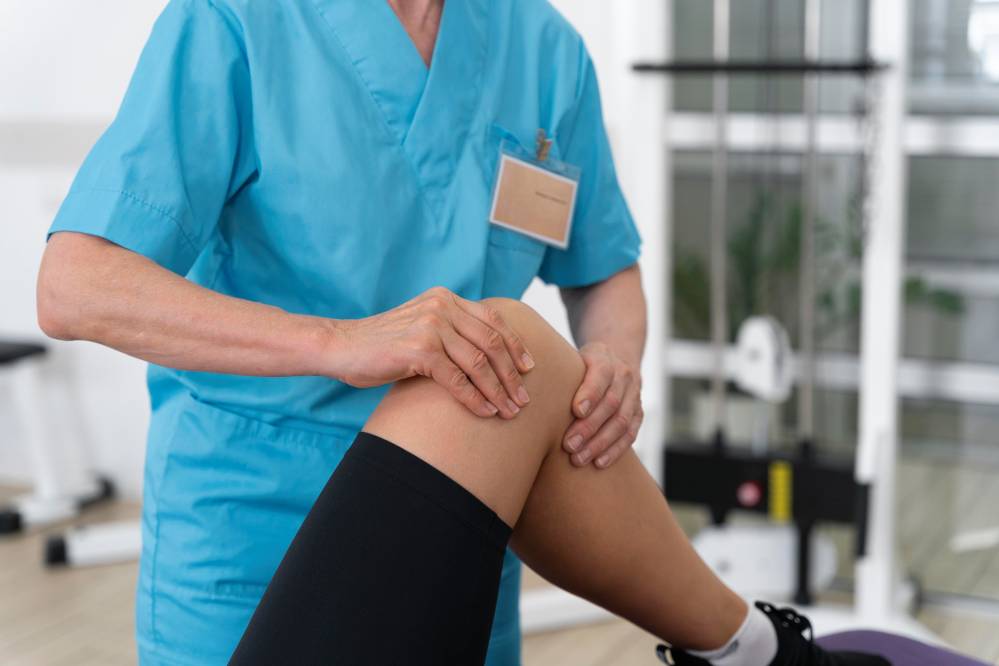
ACL reconstruction is a major step in getting back to sport, work, and the activities you love, but it is not a quick fix. One of the most common questions we hear is, “What should I expect after ACL surgery, and how long will physical therapy take?” Many people are motivated and ready to work, but they are also understandably anxious. They want to know what the timeline looks like, what is normal, what is not, and what milestones matter most.
This blog is designed to give you a realistic ACL rehabilitation timeline, explain what physical therapy is doing in each phase, and highlight the checkpoints that guide safe progression. It will also explain why rehab is not based on the calendar alone. It is based on symptoms, swelling response, range of motion, strength symmetry, and movement quality.
Important note: your surgeon’s protocol always comes first. Graft choice, meniscus repair, cartilage work, and individual restrictions can change the timeline. What follows is general education and should be adjusted to your specific surgical plan.
Why ACL rehab takes months, and why that is a good thing
ACL rehab takes time for two main reasons. First, the graft and surrounding tissue need time to heal and remodel. Second, your body needs to rebuild strength and neuromuscular control. The knee can feel “better” long before it is ready for cutting, pivoting, and high speed sport. That gap is where reinjury risk lives.
Many experts emphasize delaying return to sport until at least 9 months, and using objective return to sport criteria rather than time alone. Evidence based discussions have highlighted that returning too early can dramatically increase the risk of a second ACL injury, and that waiting longer up to that 9 month mark reduces reinjury risk.
Pre surgical planning and prehab, if you have time
If surgery is scheduled and you have a few weeks to prepare, prehab can be a game changer. Goals often include reducing swelling, restoring full knee extension, maximizing knee flexion, and building quadriceps and hip strength. Prehab also improves confidence. You walk into surgery with a plan and a baseline.
Just as important is scheduling. It is wise to book physical therapy visits before surgery, so you are not delayed by scheduling constraints when you are cleared to begin. Early motion work matters, and delays can make stiffness harder to overcome.
Phase 1: Weeks 0 to 2, protect, calm, restore extension, and regain basic control
Early rehab is about controlling swelling and protecting healing tissue while re establishing basic function. Swelling is not just a comfort issue. Swelling can inhibit quadriceps activation and slow progress. In this phase, we focus on symptom management and foundational mechanics.
Common goals include:
- Full knee extension early, this is critical for normal walking and long term knee health
- Progressive knee flexion as tolerated based on the surgeon’s protocol
- Quadriceps activation, especially the ability to perform a strong quad set and straight leg raise without a lag
- Safe gait training with appropriate assistive devices and weight bearing restrictions
- Patellar mobility and soft tissue work as needed for comfort and motion
Many patients are surprised that the first sessions do not feel like a “workout.” That is by design. Early rehab is about reducing barriers to progress. Once motion and swelling are managed, strength comes faster.
Phase 2: Weeks 2 to 6, build strength foundations and movement quality
As swelling improves and motion increases, the focus shifts toward strength and control. This is when you transition from basic activation to more functional patterns. You might progress through controlled squats, step ups, and closed chain strengthening that respects graft protection and any restrictions related to meniscus repair.
This is a phase where Blood Flow Restriction Training can be valuable. BFR allows you to train with lighter loads while still stimulating muscular adaptations. That can be helpful when heavy loading is not appropriate yet, and when quadriceps inhibition is still present. Systematic reviews have reported that BFR may help reduce quadriceps atrophy and support early strength recovery after ACL reconstruction when used appropriately and individualized to the patient.
In the clinic, we consider BFR a tool, not a shortcut. It is often used to bridge the gap between early limited loading and later high load strength work.
Phase 3: Weeks 6 to 12, strength, hypertrophy, and symmetry
This phase often feels like “real training.” The exercises become more challenging, single leg work increases, and we start emphasizing symmetrical movement and control. Many patients report they feel much better during this phase. They walk more normally, stairs improve, and daily life feels easier.
This is also where objective testing matters. Research shows that patient reported function can improve earlier than quadriceps symmetry. In other words, you can feel better while still having meaningful strength deficits. Those deficits are important because quadriceps strength is strongly linked to knee control and readiness for higher impact activities.
At Seattle Rehab Specialists, this is where strength dynamometer testing can be valuable. Objective testing helps us identify exactly where deficits remain, and how much symmetry you have between sides. It helps you train with purpose rather than guessing.
Phase 4: Months 3 to 5, build power, introduce plyometrics, and prepare for return to running
The jump from strength to impact is where many people either progress well or flare up. In this phase, the goal is to introduce higher rate loading in a controlled way. Plyometrics and early agility drills may begin depending on your protocol and your readiness. Criteria based progression is key. If swelling increases after sessions, that is a sign the knee is not tolerating the current dose.
Return to running is often discussed around month 4, but not everyone is ready at the same time. Common criteria include minimal swelling, full motion, good single leg control, and sufficient strength symmetry. Many rehabilitation protocols outline strength indices and movement benchmarks prior to initiating a return to run program.
This is also where walking and running analysis can be helpful. Many people develop compensations after surgery. They may offload the surgical side, over stride, or land with altered mechanics. A detailed analysis can reveal those patterns early and guide corrections that reduce stress and improve efficiency.
Phase 5: Months 5 to 9 plus, return to sport preparation, cutting, and confidence
Return to sport is more than being able to run. Cutting, pivoting, jumping, and reacting are high demand tasks that require strength, power, coordination, and confidence. This phase typically includes progressive plyometrics, deceleration training, cutting drills, and sport specific work, all progressed as you meet criteria.
Many programs use objective return to sport testing such as:
- Quadriceps and hamstring strength symmetry targets
- Hop testing symmetry and quality
- Movement quality analysis, including knee control, trunk control, and landing mechanics
- Sport specific drills that mimic the demands of your activity
Delaying clearance until at least 9 months and using objective criteria rather than time alone is widely discussed in sports medicine circles due to reinjury risk considerations.
Where dry needling can fit in ACL rehab
Dry needling is not a core ACL rehab intervention, but it can be a useful adjunct in certain situations. After surgery, muscles can guard, the quadriceps can feel inhibited, and the hip or calf can develop secondary tightness. If pain or muscular guarding limits motion or quality strengthening, dry needling may help reduce sensitivity and improve tolerance to movement in some patients. It is always paired with movement and strengthening, not used as a stand alone solution.
Common setbacks and what they mean
- Swelling that spikes after activity – This usually means the load progression was too fast. The solution is often adjusting volume, intensity, and recovery.
- Persistent loss of knee extension – This should be addressed quickly. Extension is foundational for gait, stairs, and long term knee mechanics.
- Anterior knee pain – Often related to patellofemoral stress or quadriceps tendon irritation, and it usually responds to adjusted loading, hip and quad strengthening, and mechanics work.
- Fear of reinjury – This is normal and should be addressed directly. Confidence is built through graded exposure, objective milestones, and repeated successful movement experiences.
When to call your surgeon or seek medical input
- Contact your surgical team promptly if you experience:
- Increasing redness, warmth, fever, or drainage
- Sudden swelling increase not related to rehab load
- Calf pain, swelling, or shortness of breath
- A new traumatic event such as a fall with a pop
- Persistent inability to gain knee extension
Your PT can help triage and coordinate, but urgent symptoms should be reported immediately.
A realistic expectation: rehab is not Amazon Prime
Most ACL injuries did not happen because you were weak in one exercise. They happen due to complex movement demands, speed, fatigue, and unpredictable sport situations. Rebuilding a resilient knee takes time. The most successful patients treat rehab like training: consistent work, smart progression, good sleep, and recovery. You will have weeks where you feel great and weeks where you feel stiff. The importance item to remember is to stay consistent in your rehab program.
Every surgery is different, but patients often find it helpful to see what the phases usually look like in plain language. The time ranges below assume an uncomplicated ACL reconstruction without additional procedures. If you had a meniscus repair, cartilage procedure, or other ligament work, your timeline may slow down and your precautions may be different.
Weeks 0 to 2
Primary focus is swelling control, restoring full extension, and re establishing basic quadriceps activation. You learn safe gait and transfers. Many people are surprised how much energy daily tasks require. This is normal.
Weeks 2 to 6
Focus expands to early strength and movement patterns. You progress squats and step ups within safe ranges. You build tolerance for longer walking. BFR may be introduced for quadriceps recovery if appropriate. You continue to prioritize swelling control because swelling is still a major limiter to strength gains.
Weeks 6 to 12
Strength becomes the center of the plan. You progress single leg work, increase resistance, and start building symmetry. This is where many people feel like they are “back,” but objective strength testing often shows the surgical side still lags behind. Dynamometer testing can help quantify these differences so we can target what matters.
Months 3 to 5
You begin higher velocity movements, early plyometrics, and return to run preparation when criteria are met. You may start a structured return to run program and progressively build tolerance. Walking and running analysis can identify compensations before they become persistent patterns.
Months 5 to 9 plus
You build power, cutting mechanics, and sport specific tolerance. You progress from controlled drills to reactive demands. Return to sport decisions are guided by strength symmetry, hop testing, movement quality, and confidence, not just time.
Return to sport criteria, what we are looking for
While protocols vary, many return to sport frameworks include a combination of strength, performance tests, and movement quality. Common components include:
- Quadriceps and hamstring strength symmetry, often targeting high symmetry between limbs
- Hop testing symmetry and landing quality
- Quality of single leg squat, step down, and deceleration mechanics
- Sport specific agility tolerance without swelling increase
- Psychological readiness, because fear and hesitation change mechanics
In other words, you are not cleared because the calendar says so. You are cleared because your knee demonstrates readiness.
How clinic testing and services can support your timeline
Strength dynamometer testing
This provides objective data on how strong your surgical leg is compared to your non surgical leg and compared to benchmarks. It also helps catch the common situation where you feel good but still have a meaningful strength gap.
Blood Flow Restriction training
BFR can be used to support quadriceps strength and muscle mass when high loads are not yet appropriate. Current evidence supports its use as a tool in ACL rehab when applied safely and paired with progressive strengthening. A 2024 systematic review and meta analysis in Arthroscopy discussed benefits of BFR after ACL reconstruction.
Dry needling
Dry needling can be used as an adjunct when muscle guarding, pain, or mobility limitations are slowing progress. It is never the main driver of ACL rehab, but it can help some patients tolerate strength work and restore more normal movement patterns.
Walking and running analysis
After ACL surgery, many people unconsciously offload the surgical side. A detailed analysis can identify stride changes, hip stability deficits, and landing strategies that contribute to knee overload. Fixing mechanics early can improve efficiency and reduce reinjury risk as you return to impact.
What to expect for visit frequency
Frequency depends on tissue irritability, your goals, and your ability to perform your program outside the clinic. Many patients start at two visits per week early on for guidance, swelling management, and progression. Over time, as you gain independence and the program becomes more strength and performance focused, frequency often transitions to once per week or every other week. The overall timeline can still be months, but the visit frequency usually changes as you progress.
Frequently asked questions
When will I walk without crutches
This depends on your surgeon’s restrictions and your control. Many patients transition as swelling improves and quad control returns, but it varies widely with meniscus procedures and graft type.
When can I drive
Driving depends on which leg was operated on, your reaction time, medication use, and comfort. Your surgeon is the best source for clearance.
When can I run
Running is often discussed around month 4, but only if you have minimal swelling, good strength progression, and good single leg control. Some people need more time, and that is normal.
Why does my knee still swell after workouts
Swelling is feedback. It often means the intensity or volume was too high for the current phase. Swelling does not mean you failed. It means we need to adjust the dose and progress more gradually.
One final reminder: the goal is not to simply reach the finish line of rehab. The goal is to rebuild a knee that can tolerate the demands of your sport and your life. That is why we measure, retest, and progress based on how your knee responds, not just how many weeks have passed.
Research and resources
Mass General Brigham ACL Rehabilitation Protocol, PDF
https://www.massgeneral.org/assets/mgh/pdf/orthopaedics/sports-medicine/physical-therapy/rehabilitation-protocol-for-acl.pdf
Timeline of gains in quadriceps strength symmetry after ACL reconstruction, 2020
https://pmc.ncbi.nlm.nih.gov/articles/PMC7727404/
Systematic review: Blood Flow Restriction training after ACL reconstruction, 2020
https://pmc.ncbi.nlm.nih.gov/articles/PMC7727417/
Return to play after ACL reconstruction, key metrics and timing, AMSSM Sports Medicine Update 2025
https://www.sportsmed.org/membership/sports-medicine-update/winter-2025/return-to-play-after-acl-integrating-key-metrics
Blood Flow Restriction Training and its use in rehabilitation after ACL reconstruction, PubMed 2024
https://pubmed.ncbi.nlm.nih.gov/39458215/
Blood Flow Restriction enhances recovery after ACL reconstruction, systematic review and meta analysis, Arthroscopy, 2025
https://www.arthroscopyjournal.org/article/S0749-8063%2824%2900416-X/abstract