
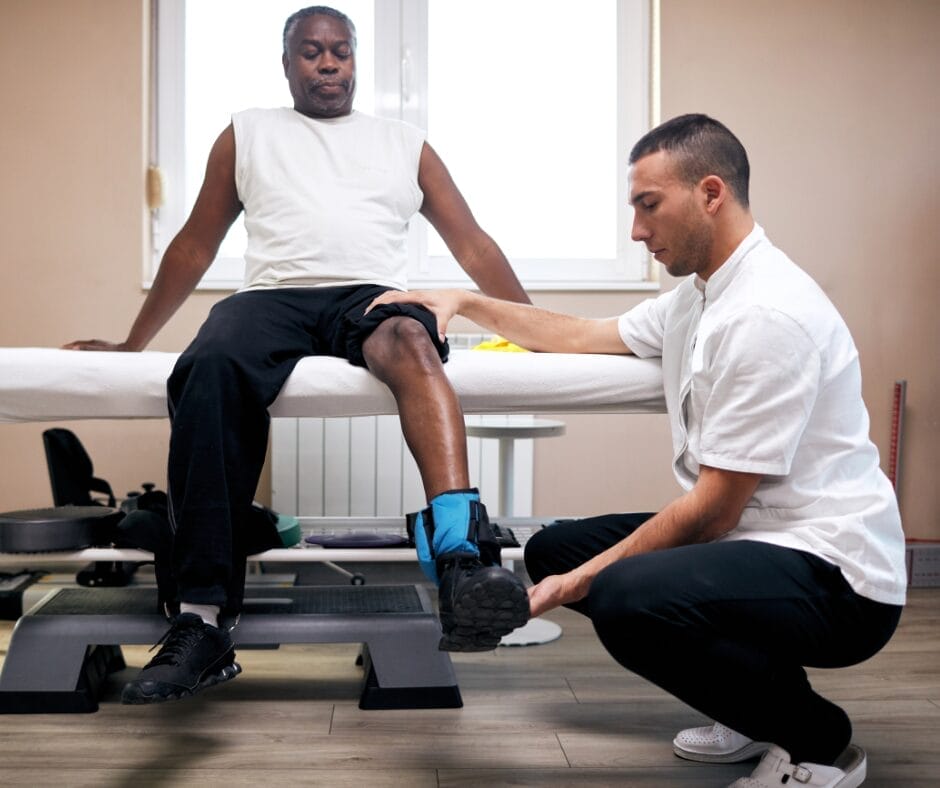
If you’ve ever caught yourself saying…
“My hamstrings are always tight.”
“My hips never loosen up.”
“My back feels stiff every morning.”
…you’re not alone.
Feeling “tight” is one of the most common reasons people begin searching for stretches online or decide to visit a physical therapist. Many people assume that tightness automatically means their muscles are too short and simply need to be stretched.
Sometimes that’s true.
But surprisingly, tight muscles are not always the problem.
At Seattle Rehab Specialists, one of the biggest mindset shifts we help patients make is understanding that tightness is often a symptom rather than the actual issue. In many cases, your body is creating the sensation of tightness for a reason.
Understanding that reason is often the first step toward lasting relief.
What Does “Feeling Tight” Actually Mean?
Most people describe tightness as a feeling of restriction or stiffness when they move.
The interesting part is that there isn’t a medical test that measures “tightness.”
Instead, tightness is something your nervous system allows you to feel.
That means two people can have identical flexibility, yet one person feels extremely tight while the other feels perfectly normal.
This tells us something important:
Feeling tight and actually being inflexible are not always the same thing.
Why Your Body Creates Tightness
Think of tightness as your body’s way of getting your attention.
Just like pain, the sensation of tightness can be protective.
Your nervous system may increase muscle tension because it senses that an area needs more stability or support.
Rather than asking, “What stretch should I do?”
A better question is:
“Why is my body making this muscle work so hard?”
That change in thinking often leads us to the real answer.
Four Common Reasons You Feel Tight
1. Your Muscles Are Working Overtime
This is one of the most common findings we see in the clinic.
Imagine your glutes are weak.
Every time you walk, squat, climb stairs, or run, your hamstrings have to work harder to make up for the lack of hip strength.
Eventually those hamstrings begin to feel constantly tight.
The hamstrings aren’t necessarily short.
They’re tired.
Stretching them may provide temporary relief, but unless the hips become stronger, the tightness usually returns.

2. You Don’t Have Enough Strength
This surprises many people.
Sometimes muscles become tight because they don’t feel strong enough to control movement.
The nervous system responds by increasing muscle tone to create stability.
This is one reason people often feel tight after an injury or during periods of decreased activity.
The solution isn’t always more stretching.
Often it’s gradually rebuilding strength and confidence in movement.
3. You Sit More Than You Move
Many Seattle professionals spend eight to ten hours each day sitting.
While sitting itself is not bad, staying in one position for long periods can leave your joints and muscles feeling stiff.
The good news? Most people don’t need a perfect stretch. They simply need to move more frequently throughout the day.
Short walking breaks, changing positions, and incorporating regular movement often make a bigger difference than one long stretching session.
4. Your Body Is Protecting You
Sometimes tightness is your body’s protective response.
If your lower back feels unstable, the surrounding muscles may tighten to create additional support.
If your shoulder has been irritated, nearby muscles may become guarded.
In these situations, stretching aggressively can actually make the area feel worse because you’re treating the symptom instead of the reason the body became protective.
A Patient Story
Emily from Fremont came to our clinic convinced she had the tightest hamstrings in Seattle.
She stretched every morning before work, before every run, and every evening. Despite all of that, her hamstrings never felt better.
During her evaluation we found reduced hip strength, limited single-leg control, and difficulty using her glutes while running.
Rather than giving Emily another stretching routine, we focused on improving hip strength, single-leg stability, and movement quality.
Within a few weeks she simply didn’t feel as tight anymore.
The problem had never been her flexibility. It was the demands being placed on her muscles.
So…Should You Stop Stretching?
Absolutely not.
Stretching can be an excellent tool, but it is only one part of the toolbox.
Many people also need improved strength, mobility, load tolerance, movement quality, and gradual return to activity.
What the Research Says
Exercise therapy, progressive strengthening, and movement-based rehabilitation consistently demonstrate stronger long-term outcomes than passive treatments alone for many common musculoskeletal conditions.
A review published in The Lancet (Foster et al., 2018) concluded that exercise and maintaining activity are central components in the management of persistent musculoskeletal pain.
Final Thoughts
Feeling tight all the time does not necessarily mean your muscles need more stretching.
Sometimes they do.
But often, your body is asking for something different.
At Seattle Rehab Specialists, we believe lasting results come from identifying the root cause rather than simply treating the symptom.
Learn more at www.seattlerehabpt.com
References:
Foster NE et al. The Lancet. 2018.
Delitto A et al. JOSPT Clinical Practice Guidelines.